
A wind storm rolls through and your roof looks fine from the street. No missing shingles, no blue tarps on the neighbors’ houses. You breathe easy — and that’s exactly where homeowners get into trouble.
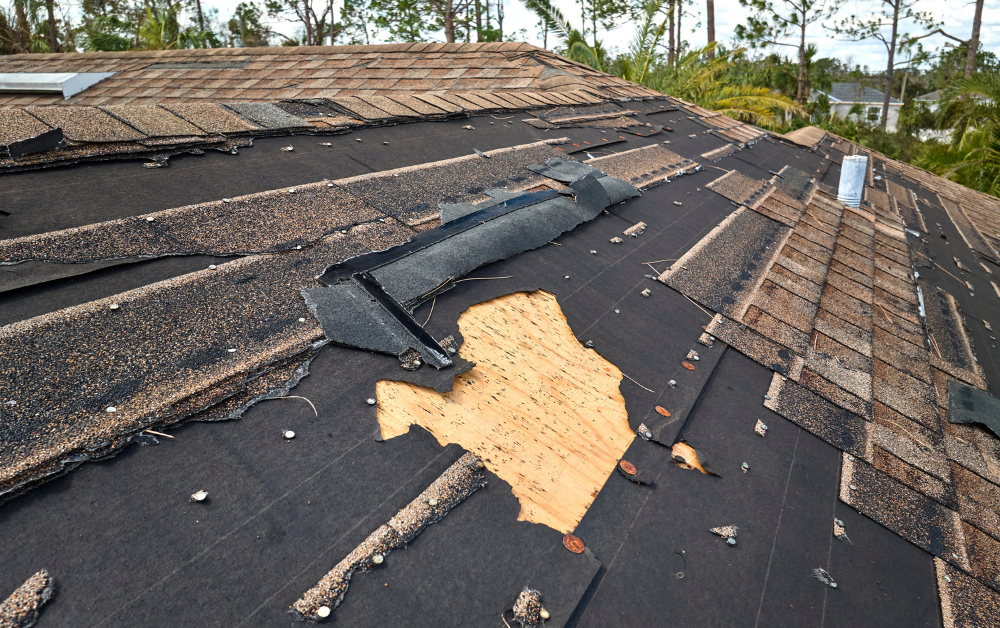
Wind damage doesn’t always announce itself. Some of the costliest roof failures begin as invisible injuries: a shingle lifted a quarter inch, a flashing seal cracked, a granule layer stripped thin. Left unchecked, these become water intrusion problems that reach your attic, your insulation, and eventually your ceiling. The good news is that a methodical check right after a storm — no ladder required — can catch the early signs before they compound.
Here’s what to look for.
How Wind Actually Damages a Roof
Wind doesn’t need to tear shingles off to cause damage. At sustained speeds above 45–55 mph, wind creates uplift pressure that can break the adhesive seal holding a shingle’s tabs down. The shingle settles back in place after the storm passes — looking perfectly intact from the curb — but the bond is gone. Rain now has a pathway underneath.
The areas most vulnerable to this kind of damage are the ridgeline, eaves, rakes (the sloped edges), and any valleys where two roof planes meet. These are the zones wind hits hardest, and they’re the first places to inspect.
Safe Ground-Level Inspection: Where to Start
You don’t need to get on the roof to gather useful information. Start with a slow walk around the perimeter of your home with your eyes up.
Look for:
- Shingles on the ground, in gutters, or in landscaping
- Exposed felt paper or dark patches where granules have been stripped
- Shingles that appear curled, lifted at the edges, or misaligned
- Damaged or detached soffit panels and fascia boards
- Gutters pulled away from the roofline or dented from debris
Use binoculars if you have them. You’re looking for any disruption to the uniform texture and pattern of your roof surface.
The Granule Problem Most Homeowners Overlook
Asphalt shingles are coated with mineral granules that protect the underlying asphalt from UV degradation and weathering. A hard wind strips those granules. You won’t see it from the ground, but you will see the evidence: a heavy accumulation of gritty, sand-like material in your gutters or at the base of your downspouts after the storm.
A few granules after every rain is normal. A thick layer after a wind event is a signal that your shingles have been compromised. Once the granule layer thins past a certain point, the shingles age rapidly — a roof that had five years of life left can lose that timeline quickly.
Red Flags to Check Inside Your Home
Wind damage that’s already progressed will often leave clues indoors before it becomes a visible ceiling stain.
Check these areas within 24–48 hours after a storm:
- Attic — look for daylight coming through the decking, wet insulation, or water stains on the rafters
- Top-floor ceilings — any new discoloration, bubbling paint, or soft spots in drywall
- Around chimneys, skylights, and exhaust vents — flashing failures almost always show up here first
- Exterior walls on the windward side of your house — wind-driven rain can exploit any compromised seal
Why Slow Leaks Are More Dangerous Than Obvious Damage
A missing shingle is easy to act on. A slow leak is not, because it often stays hidden until the damage is extensive. Water that enters through a lifted shingle can travel several feet along the roof deck before finding a low point to drip through. By the time you see a stain, there’s likely mold-prone moisture in your insulation and potentially compromised sheathing underneath.
The repair cost for a re-sealed shingle is negligible. The cost to address water-damaged decking, insulation replacement, and interior remediation is not. Early detection is where money is saved.
When to Call a Roofing Professional
Some findings are clear calls for professional assessment:
- Any visible lifted, creased, or displaced shingles
- Granule loss visible in gutters following a storm
- Loose, bent, or separated flashing around penetrations
- Soft spots or water staining in your attic after the storm
- Your roof is more than 15 years old and was exposed to high winds
A professional inspection after a storm isn’t just about identifying current damage — it’s about documenting what the storm did before conditions change. That documentation matters if you file an insurance claim.
Bottom Line: Don’t Wait for a Leak to Act
Wind damage is a slow problem that becomes a fast expense. After any storm with sustained winds above 45 mph or gusts above 60 mph, a ground-level check takes less than 15 minutes and can save thousands.
Your post-storm checklist:
- Walk the perimeter and inspect from the ground
- Check gutters for granule accumulation
- Look in the attic for moisture or daylight
- Check ceilings on the top floor for new staining
- Call a roofer if anything looks off — or if you’re unsure
Conner Roofing has been serving St. Louis homeowners since 1993. If a storm has moved through your area and you want a professional set of eyes on your roof, contact our team for an inspection. Finding damage early is always the right call.