
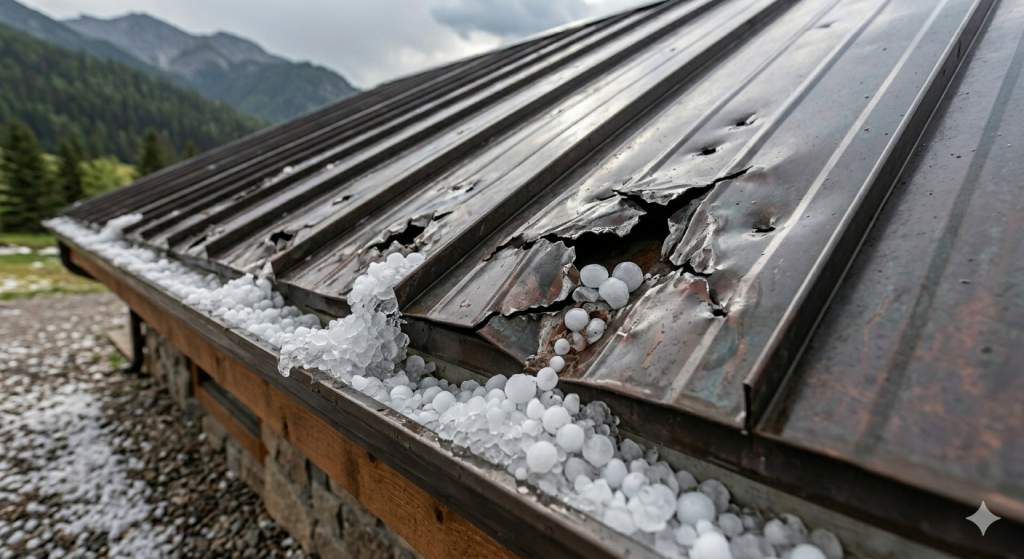
Hailstorms can strike fast, and the damage they leave behind isn’t always obvious from ground level. Knowing what to do before severe weather rolls in — and what steps to take once it passes — can save you thousands in undetected roof and exterior damage.
How to Prepare Your Property Before a Hailstorm
Preparation is your first line of defense. Most homeowners skip this step entirely, and that’s where avoidable damage begins.
- Move vehicles into a garage or covered area. Hail dents are costly and often exceed insurance deductibles.
- Secure outdoor furniture, planters, and decorations. Flying objects during high winds cause secondary damage to siding and windows.
- Clear gutters and downspouts. Clogged drainage causes water to back up under shingles after heavy storms, leading to interior leaks.
- Trim overhanging tree branches. Limbs weakened by hail often snap and land on your roof.
- Document your roof and exterior with time-stamped photos. Pre-storm images give you clear evidence for insurance claims if damage occurs.
Hailstones the size of quarters — roughly one inch in diameter — can cause functional damage to asphalt shingles even when the roof looks fine from the street.
Immediate Steps to Take After Hail Passes
Once the storm clears, resist the urge to climb onto your roof. What you do in the first 24 to 48 hours matters, but safety comes first.
Start with a ground-level walkthrough. Look for these signs:
- Dents on metal surfaces like gutters, downspouts, and AC units
- Cracked or chipped siding panels
- Broken window screens or cracked glass
- Bruised landscaping (this signals hailstone size and intensity)
Check your attic if safely accessible. Look for daylight through the roof deck, water stains, or damp insulation — early indicators that shingles have been compromised.
Contact your insurance company promptly. Most policies have specific timelines for filing hail claims. Have your pre-storm photos ready and note the date and approximate duration of the storm.
Red Flags That Signal Hidden Hail Damage
Hail damage to roofing is deceptive. A roof can look intact from the ground while having impact points that shorten its lifespan by years.
- Granule loss on shingles. Check gutters for an unusual buildup of dark, sand-like granules — the protective coating stripped by hail impact.
- Soft spots or bruising on shingles. Not visible from the ground, but detectable during a hands-on inspection. Bruised shingles lose waterproofing ability over time.
- Dented flashing around vents and chimneys. Metal components dent easily and compromise seals where water is most likely to penetrate.
- Cracked ridge cap shingles. The peak of your roof takes the most direct hits during a hailstorm.
If your neighbors are getting roof replacements after the same storm, your home was likely affected too — even without visible damage.
Why a Professional Inspection Should Follow Any Hail Event
Hail damage is a slow-leak problem, not an immediate one. Shingles that look fine today can fail within 12 to 18 months because the underlying mat was fractured on impact. By the time you notice a ceiling stain, the damage has spread well beyond the original strike zone.
A trained inspector knows what hail impact patterns look like versus normal weathering. They can distinguish cosmetic blemishes from functional damage your insurance will cover.
A proper post-hail inspection includes:
- Full roof surface examination for impact marks and granule displacement
- Flashing, vent boot, and chimney cap evaluation
- Gutter assessment for dents indicating hailstone size
- Attic check for moisture intrusion
- Detailed photo documentation for insurance filing
Be cautious of storm chasers — out-of-town contractors who appear after severe weather, offer suspiciously low quotes, and disappear before warranty issues surface. Red flags include no local office address, pressure to sign before any inspection, and offers to “waive your deductible” (which is insurance fraud in most states).
The Bottom Line: Your Post-Hailstorm Checklist
- Stay safe — never get on your roof yourself after a storm
- Walk your property and document visible damage with photos
- Contact your insurance company within 24 to 48 hours
- Schedule a professional inspection with a local, licensed roofing contractor
- Get a written report with photos before approving any work
- Verify contractor credentials, insurance, and warranty terms before signing
Hail damage doesn’t fix itself and doesn’t stay contained. A few cracked shingles can turn into interior water damage and mold if left unchecked.
Next Steps
If your home recently experienced a hailstorm — or you’re unsure whether past storms caused undetected damage — schedule a free roof inspection with a qualified local professional. A 30-minute inspection now can prevent months of costly repairs later.
Conner Roofing has been inspecting and repairing hail-damaged roofs across the St. Louis metro area for over 30 years. Call (314) 375-7475 or visit connerroofing.com/contact-us to schedule your free storm damage assessment.