
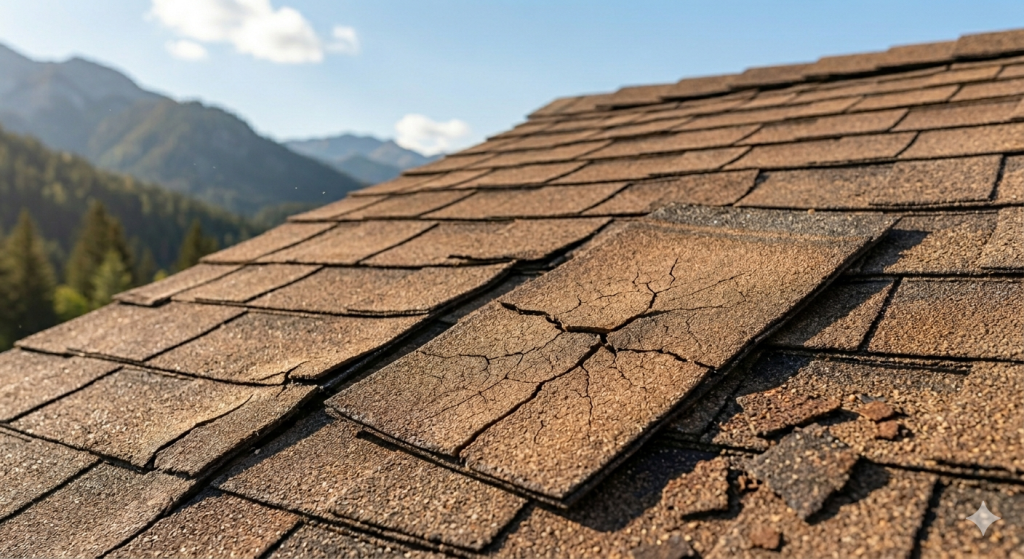
No hail. No high winds. No falling debris. The weather has been completely unremarkable — and yet your roof is cracking.
It happens more than most homeowners expect, and the explanations rarely make headlines because there’s nothing dramatic about them. Shingles crack because asphalt is a petroleum-based material that ages, dries out, and loses its flexibility over time. That process happens whether a storm ever rolls through or not. The sun does it. Poor attic ventilation does it. Years of ordinary freeze-thaw cycles do it. And once a shingle loses the flexibility to handle the small stresses of daily life on a roof, it splits.
The problem isn’t the crack itself — it’s what comes after. Understanding why shingles crack without a storm is how you stop treating the symptom and start addressing the cause.
The Everyday Forces That Break Down Shingles
Most homeowners associate roof damage with acute events: storms, fallen limbs, hail strikes. But shingle degradation is mostly a slow, chronic process driven by forces that are present every single day.
The primary culprits:
- UV radiation — Ultraviolet exposure breaks down the asphalt binder in shingles continuously. Over years, this makes shingles rigid and prone to splitting under even minor stress
- Thermal movement — Daily expansion and contraction from temperature shifts creates repetitive mechanical stress that fatigues shingle material at the microscopic level, independent of any weather event
- Oxidation — Asphalt oxidizes as it ages, losing its oil content and becoming increasingly brittle
- Moisture cycling — Shingles absorb and release moisture regularly. Each cycle stresses the material slightly, and those stresses accumulate over a roof’s lifetime
None of these forces make the evening news. All of them are eroding your roof right now.
Why Older Roofs Are a Different Animal
A five-year-old roof and a seventeen-year-old roof look similar from the curb on a calm day. They don’t behave similarly under stress.
Fresh asphalt shingles contain oils that keep the material supple and allow it to flex without fracturing. As shingles age, those oils gradually evaporate through a process called desiccation. By the time a standard 3-tab or architectural shingle reaches the 12–15 year mark, a meaningful portion of that flexibility is gone. The shingle is doing the same job — expanding in heat, contracting at night, shedding water, absorbing minor impacts — but with far less tolerance for any of it.
This is why two identical-looking roofs can behave so differently. Age isn’t just a number on a warranty document. It’s a real change in material properties that determines how much daily stress a shingle can absorb before it gives.
What Non-Storm Cracking Actually Looks Like
Cracking from age and environmental fatigue has a different appearance than storm damage. Knowing the difference helps you identify it accurately.
Look for:
- Longitudinal cracks running along the length of the shingle, following the granule surface
- Spider-web or map cracking — a network of fine surface fractures, most visible on flat sections of older shingles
- Splitting along tab edges on 3-tab shingles, where the thinner sections are most vulnerable
- Corner fractures on architectural shingles where two planes of the shingle meet
- Sections that look faded or chalky compared to surrounding shingles — this is oxidized asphalt, and those shingles are near the end of their flexibility
Age-related cracking often appears gradually across multiple shingles in a section rather than concentrated in a single impact zone the way hail damage would be.
Hidden Causes Most Homeowners Miss
Beyond age and UV exposure, there are two factors that accelerate shingle cracking that rarely get attention:
Poor attic ventilation — When heat builds up in an attic without adequate airflow, it cooks shingles from underneath while the sun heats them from above. A poorly ventilated attic can raise the roof deck temperature significantly, compressing years of UV aging into a much shorter window. If your attic runs noticeably hot in summer, your shingles are aging faster than the warranty suggests.
Roof layering — Homes where new shingles were installed over old ones trap heat in the existing layer. The additional thermal mass accelerates drying and oxidation in both layers. Many contractors and building codes allow one layer of overlay, but it comes with a real cost to shingle longevity.
Red Flags the Problem Is Already Spreading
Cracked shingles that are actively letting water in will often leave evidence before a visible ceiling stain appears.
Check for these warning signs:
- Gritty granule buildup in gutters without a recent storm — cracked shingles shed granules at an accelerated rate
- Attic insulation that smells musty or appears compressed and discolored in spots
- Dark streaking on roof decking or rafters when you inspect the attic
- Shingles that flex noticeably when the surface temperature changes — you can sometimes see slight waviness on older roofs on hot afternoons
- Any section of your roof that appears lighter or more faded than the surrounding area
One cracked shingle in isolation is a minor repair. A pattern of cracking across a section of your roof is a sign that the entire system has reached a threshold.
When to Call a Roofing Professional
Age-related cracking warrants a professional assessment when:
- Your roof is 12 or more years old and you haven’t had a formal inspection in the past two years
- You can see surface cracking, spider-web fractures, or split tab edges from the ground
- Granule accumulation in your gutters is heavy and consistent between rain events
- Your attic runs noticeably hot in summer months, suggesting a ventilation issue
- You’re planning to sell the home and want an accurate picture of remaining roof life
A trained eye can distinguish between surface-level weathering and structural cracking that’s actively creating water pathways — a distinction that matters a lot when deciding between a targeted repair and a full replacement.
Bottom Line: Prevention Costs Less Than Reaction
Shingle cracking without a storm isn’t bad luck. It’s a predictable outcome of aging materials under daily environmental stress. The variable isn’t whether it happens — it’s whether you catch it early enough to address it before water damage enters the picture.
A simple preventive maintenance framework:
- Schedule a professional roof inspection every two years once your roof passes the 10-year mark
- After any summer with extreme heat, do a ground-level visual scan for surface cracking or fading
- Inspect your attic annually for moisture, odor, or discoloration on decking and insulation
- Clear gutters regularly and check for granule accumulation after dry periods
- If your home has a roof overlay, ask a professional to assess the condition of the underlying layer
Conner Roofing has been working with St. Louis homeowners since 1993. If your roof is aging and you’re not sure where it stands, our team can give you an honest assessment — and a clear picture of what preventive maintenance now can save you later.