
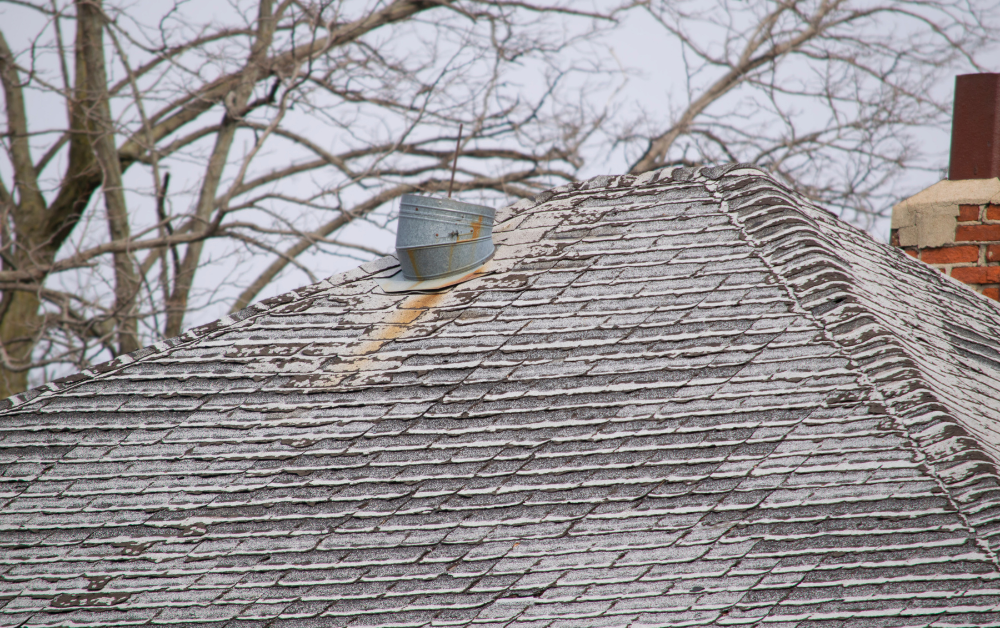
Storm damage doesn’t always look like storm damage. Months after a major weather event, the evidence shows up as water stains, deteriorating materials, and drainage problems—symptoms that could easily be mistaken for normal aging. Knowing what to look for helps you connect current roof issues to past storms and take action before small problems become major repairs.
Interior Warning Signs: What’s Happening Inside Your Home
The first signs of old storm damage often appear inside—not on your roof. Water finds the path of least resistance, and compromised roofing eventually lets moisture through.
Check these areas regularly:
- Ceilings below the attic — look for yellow or brown stains, especially after rain
- Walls near the roofline — water can travel down framing before showing up
- Attic spaces — moisture on rafters, wet insulation, or daylight through the roof boards
- Around skylights and vents — common leak points where flashing may have shifted
- Closets on top floors — often overlooked areas where stains go unnoticed
Red flags that point to storm damage specifically:
- Stains that appeared or grew after a remembered storm
- Moisture patterns that show up only during heavy rain or wind-driven rain
- Musty odors in the attic that started within the past year
- Paint bubbling or peeling near the ceiling line
Interior stains don’t always mean active leaks. Sometimes the water intrusion happened months ago during one severe storm, and you’re seeing the residual damage. Either way, the source needs investigation.
Missing, Lifted, or Brittle Roofing Materials
Storm damage weakens roofing materials in ways that become visible over time. What wind or hail started, sun and temperature cycles finish.
Shingle damage patterns to watch for:
- Missing shingles — obvious gaps where material blew off entirely
- Lifted edges — shingles that curl up at corners or along seams
- Cracked surfaces — splits that run across the shingle face
- Brittle texture — shingles that break or crumble when touched
- Exposed nail heads — indicating shingles have shifted from original position
How to spot damage from the ground:
Look at your roof from across the street on a sunny day. Healthy shingles have uniform color and lie flat. Storm-damaged sections often show:
- Color variations where granules are missing
- Wavy or uneven lines that should be straight
- Shadow patterns indicating lifted materials
- Visible gaps in what should be continuous coverage
If your roof is 10+ years old, some wear is normal. But if these issues appeared or worsened after a specific storm, the damage likely traces back to that event.
Granule Loss and Hail Damage Signs
Asphalt shingles rely on surface granules for UV protection and waterproofing. Hail knocks these granules loose, starting a deterioration process that accelerates over subsequent months.
Evidence of granule loss:
- Gutters full of granules — some loss is normal, but excessive accumulation signals damage
- Bare spots on shingles — dark patches where the asphalt substrate shows through
- Uneven coloring — areas that look shinier or darker than surrounding shingles
- Granules in downspout splash areas — concentrated deposits below gutter exits
Hail damage indicators:
- Random dent patterns — hail hits are scattered, unlike uniform wear from aging
- Soft spots — areas where the shingle feels spongy compared to undamaged sections
- Circular marks — bruising patterns matching hailstone impacts
- Cracked shingles without curling — impact fractures differ from heat-related curling
Granule loss from hail might not cause immediate leaks. But within 12 to 24 months, those exposed areas degrade significantly faster than protected sections. What looks like minor cosmetic damage becomes functional failure.
Poor Drainage and Water Pooling
Storms can shift gutters, damage flashing, and alter roof geometry in ways that create drainage problems. If water isn’t moving off your roof the way it used to, storm damage may be the cause.
Drainage issues linked to storm damage:
- Sagging gutters — wind or debris impact can pull gutters away from fascia
- Clogged downspouts — debris accumulation from storm fallout
- Water pooling on flat sections — indicating structural shift or blocked drainage paths
- Overflow during moderate rain — gutters that handled water fine before the storm
- Ice dams in winter — often worse after storm damage compromises roof integrity
What to look for:
- Water stains on fascia boards below gutters
- Erosion patterns in landscaping below roof edges
- Moss or algae growth in areas that stay wet longer than they should
- Visible sagging in gutter runs that used to be level
Drainage problems compound other damage. Water that should flow off your roof instead sits on compromised materials, accelerating deterioration and increasing leak risk.
The Timeline Test: Connecting Symptoms to Storms
When evaluating potential storm damage, timing matters. Ask yourself:
- When did I first notice this problem?
- What significant storms occurred in the 3-12 months before that?
- Did neighbors report roof damage from those storms?
- Has the problem worsened after subsequent weather events?
Storm damage follows patterns. If your roof issues appeared or accelerated after a known weather event, that connection strengthens your case—both for understanding what happened and for potential insurance claims.
When to Call a Professional
Schedule an inspection if you’re seeing:
- Multiple symptoms from different categories above
- Problems that appeared within a year of a major storm
- Progressive worsening despite no obvious new damage
- Any active leaks regardless of suspected cause
A qualified roofing contractor can assess whether your current problems stem from storm damage, normal aging, or installation issues. This distinction matters for insurance coverage and repair planning.
The Bottom Line
Old storm damage reveals itself through four main channels: interior moisture signs, deteriorating roofing materials, granule loss patterns, and drainage problems. These symptoms often appear months after the original storm because damage accumulates gradually—what wind or hail started, time and weather finish.
If you’re seeing these signs, don’t assume your roof is just getting old. Think back to storms from the past year and consider whether that’s when your problems really began.
Your Next Steps
- Walk your property — look for visible shingle damage, gutter issues, and granule accumulation
- Check your attic — look for moisture, daylight, or staining on rafters
- Document everything — photograph current conditions and note when issues first appeared
- Review storm history — check local weather records for significant events in the past 12 months
- Get a professional assessment — an experienced inspector can connect current damage to past causes
The difference between “old roof” and “storm-damaged roof” can be thousands of dollars in insurance coverage. It’s worth finding out which one you’re dealing with.