
The morning of April 14, 2026, began like many others in the Gateway City—a heavy, humid mist clinging to the brickwork of South City homes and the sprawling estates of Ladue. But by noon, a rapid pressure drop signaled the arrival of a “super-cell” weather event, a phenomenon that has become increasingly common in our shifting Midwestern climate. As baseball-sized hail began its rhythmic battering against residential structures, homeowners weren’t just thinking about curb appeal; they were witnessing a live stress test of their home’s primary defensive perimeter.
At Conner Roofing, we’ve spent over three decades observing how St. Louis architecture interacts with these aggressive environmental shifts. A roof replacement in 2026 is no longer just a matter of swapping old shingles for new ones. It is a complex engineering project that involves advanced thermal dynamics, moisture-wicking technology, and a deep understanding of the “St. Louis Freeze-Thaw” cycle. Whether you are navigating the historic building codes of Lafayette Square or the modern energy requirements of Chesterfield, replacing your roof is an opportunity to future-proof your most significant asset.
The 2026 Climate Reality: Why Your St. Louis Roof Is Under Siege
In 2026, we are dealing with a “hybrid climate.” St. Louis now experiences the humid intensity of a Gulf Coast summer followed by the erratic, bone-chilling “Polar Vortex” snaps of the North. This creates a unique physical phenomenon known as Thermal Cycling.
Think of your roof’s shingles like a lightweight raincoat for a petal. During a typical July day in St. Louis, the surface temperature of a dark asphalt roof can reach a blistering 160°F. When a sudden afternoon thunderstorm rolls in, that temperature can plummet 70 degrees in less than twenty minutes. This rapid contraction causes “shingle fatigue,” where the adhesive bonds become brittle and the granules—those tiny stones that act as your roof’s sunscreen—start to pop off.
The Hidden Threat of Ice Dams and Attic “Rain”
In the winter of 2026, we’ve seen record-breaking “Ice Damming” events. This occurs when heat escapes from your living room into your attic, melting the snow on your roof from underneath. That water runs down to the colder eaves, refreezes, and creates a literal dam of ice. Water then backs up under your shingles, leading to what we call “attic rain”—moisture that bypasses your shingles entirely and begins to rot your rafters and saturate your insulation. A professional roof replacement St Louis must address these invisible internal dynamics, not just the visible exterior.
The Forensic Approach to Roof Replacement: Our 2026 Process
When you partner with Conner Roofing, you aren’t getting a crew that just “slaps on shingles.” You are getting a forensic restoration. Our process is designed to find the weaknesses that previous installers might have overlooked.
1. The Substrate Surgery (Decking Inspection)
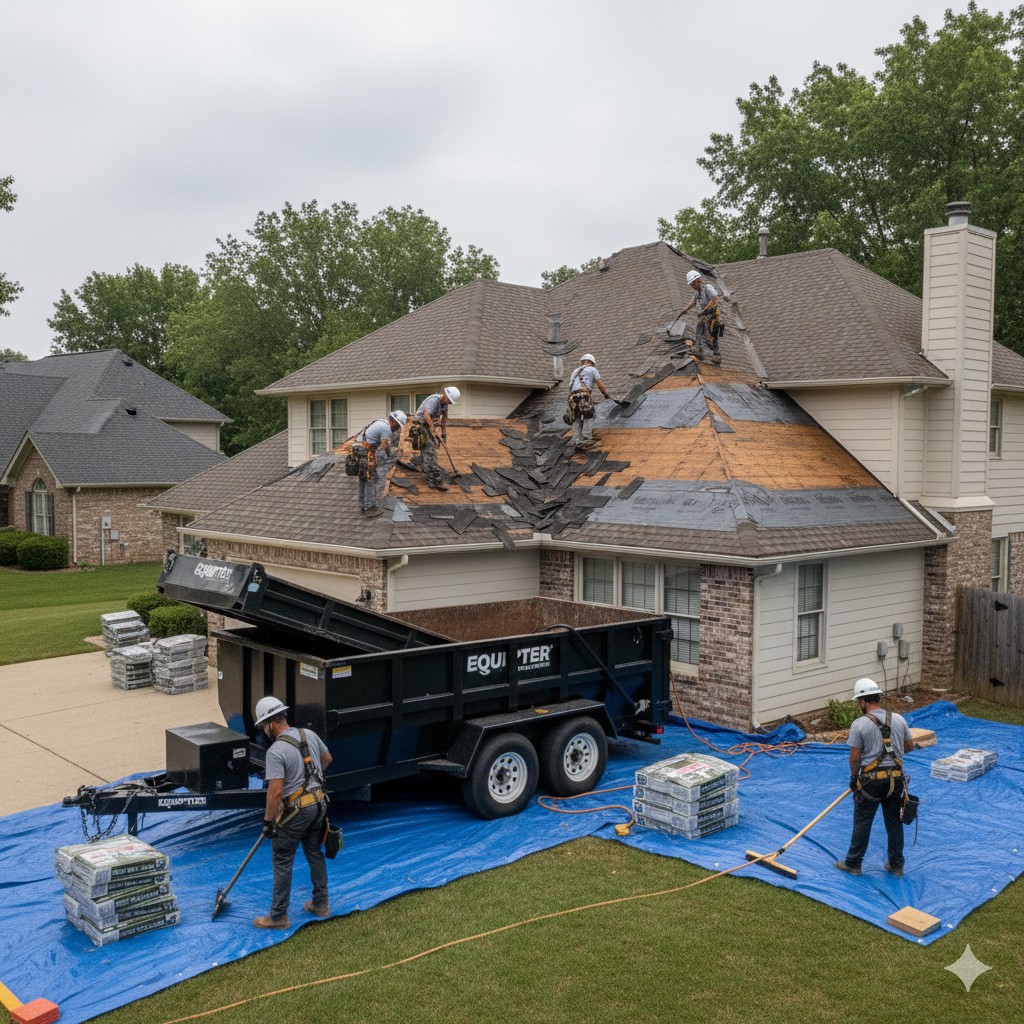
We begin by stripping your roof down to its “bones”—the plywood or OSB decking. In many St. Louis homes, especially those built during the housing booms of the 80s and 90s, we find “soft spots” where previous leaks have compromised the structural integrity of the wood. We don’t just bridge over these gaps; we perform substrate surgery, replacing compromised sheets to ensure your new roof has a rock-solid foundation.
2. Advanced Underlayment: The “Second Skin”
Shingles are your primary defense, but the underlayment is your safety net. In 2026, we have moved away from old-fashioned felt paper, which can tear and absorb moisture. We utilize high-performance synthetic underlayments that are virtually indestructible.
- Ice and Water Shields: We apply heavy-duty, self-healing membranes to valleys, chimneys, and eaves. Think of this as a specialized “waterproof gasket” that seals around every nail head.
- Breathable Barriers: These allow moisture from inside your home to escape while preventing liquid water from entering.
3. Precision Flashing and Chimney “Crickets”
Most leaks don’t happen in the middle of a roof; they happen at the “joints.” We utilize custom-bent metal flashing for chimneys, dormers, and valleys. For larger chimneys common in St. Louis architecture, we install a “cricket”—a small peaked structure that diverts water away from the chimney’s back wall, preventing a “dead zone” where debris and water collect.
Navigating the Investment: The Narrative Behind the Pricing
One of the most frequent conversations we have with homeowners involves the “value-based” investment required for a total system overhaul. It is easy to look at a quote and see only the immediate impact, but a roof replacement is a long-term financial strategy.
The investment in a new roof typically involves several variables: the total square footage, the steepness (or “pitch”) of the structure, and the tier of materials chosen. In 2026, labor rates have adjusted to reflect the specialized training required for high-tech “Smart Roof” installations and solar-integrated systems. At Conner Roofing, we provide detailed, transparent estimates because we believe you deserve to see exactly where your value is being created.
As a family-owned business with over 30 years in the St. Louis trenches, we’ve optimized our supply chains to offer competitive rates on premium brands like Owens Corning and CertainTeed. These aren’t just names; they represent the “gold standard” of weather resistance in 2026. When you factor in the long-term durability guarantees and our professional crews who are certified by these manufacturers, the “premium tier” investment often pays for itself by preventing expensive interior water damage and lowering your monthly energy costs. We treat your property with exceptional care, working efficiently to minimize the “construction zone” feel of your home, typically completing the bulk of the work within a 48-hour window depending on Missouri’s unpredictable weather.
Comparing 2026 Roofing Materials: What’s Best for St. Louis?
Choosing a material is like choosing a suit—it needs to fit the occasion. In St. Louis, the “occasion” is a 100-year storm every few years.
| Material Type | Performance Tier | St. Louis Climate Benefit | Aesthetic Impact |
| Architectural Asphalt | Value-Based | High wind resistance; widely available. | Classic, dimensional look. |
| Impact-Resistant (Class 4) | Performance | Built to withstand “Baseball Hail”; insurance discounts. | Modern, heavy-duty texture. |
| Synthetic Slate/Shake | Premium Tier | Replicates historic charm without the weight/rot. | High-end luxury appeal. |
| Metal Roofing (Standing Seam) | Lifetime Tier | 50+ year lifespan; sheds snow instantly. | Sleek, contemporary or industrial. |
The Ventilation Equation: How Your Roof “Breathes”
In 2026, we treat the roof and the attic as a single, living system. If your roof doesn’t breathe, it will literally “cook” itself from the inside out. During a St. Louis August, an unventilated attic can reach 150°F. This heat transfers to your shingles, causing them to curl and blister prematurely.
We utilize a balanced system of Soffit Vents (intake) and Ridge Vents (exhaust). This creates a natural “chimney effect,” where cool air is pulled in from the bottom and hot, moist air is pushed out at the peak. This doesn’t just protect your shingles; it lowers your HVAC load, keeping your Chesterfield or Kirkwood home cooler for a lower monthly investment.
Local Regulations and The 2026 Permit Maze
St. Louis is a patchwork of municipalities, each with its own “Permit Maze.” From the strict historic preservation guidelines of the City to the specific zoning requirements in St. Louis County, navigating the paperwork is often as complex as the installation itself.
At Conner Roofing, we handle the “Administrative Heavy Lifting.” We are well-versed in the 2026 St. Louis building codes, which now mandate specific wind-uplift ratings and energy-conservation standards. We ensure your roof replacement St Louis is fully compliant, bonded, and insured, protecting you from the legal headaches that often come with “budget” contractors.
The “After-Care” Mentality: What Happens After the Last Nail?
A roof replacement doesn’t end when the crew drives away. It is the beginning of a 20- to 50-year relationship with your home’s security. In 2026, we provide digital “Roof Health” portals for our clients, where you can see photos of your substrate, underlayment, and finished flashing.
The Cleanup Protocol: Leaving No Trace
The biggest fear homeowners have with a roof replacement is the “Landmine Field”—thousands of nails hidden in the grass. We utilize high-powered magnetic sweeps and specialized debris-containment systems (like the “Equipter”) that catch shingles before they ever touch your prized landscaping. We treat your driveway like a fragile surface, ensuring no heavy equipment causes cracks or scarring.
Final Quality Check: The Conner Roofing Standard
We understand that you have choices when it comes to roofing contractors near me. But there is a distinct difference between a company that sells “jobs” and a company that builds “protectors.”
- Family-Owned Integrity: We aren’t a national franchise; we are your neighbors.
- Certified Excellence: Our status as Owens Corning Platinum or CertainTeed Select ShingleMaster installers means our work is inspected by the manufacturers themselves.
- 2026 Technology: We utilize drone-assisted thermal imaging to ensure your new roof is performing perfectly before we sign off on the project.
Your roof is the only thing standing between your family and the unpredictable St. Louis sky. Don’t leave it to chance.